How to Catch Green Crab
Green crabs are small invasive shore crabs, abundant and easy to catch by hand or trap along both US coasts, prized less for picked meat than for the rich seafood stock they make - and catching them helps native shellfish.
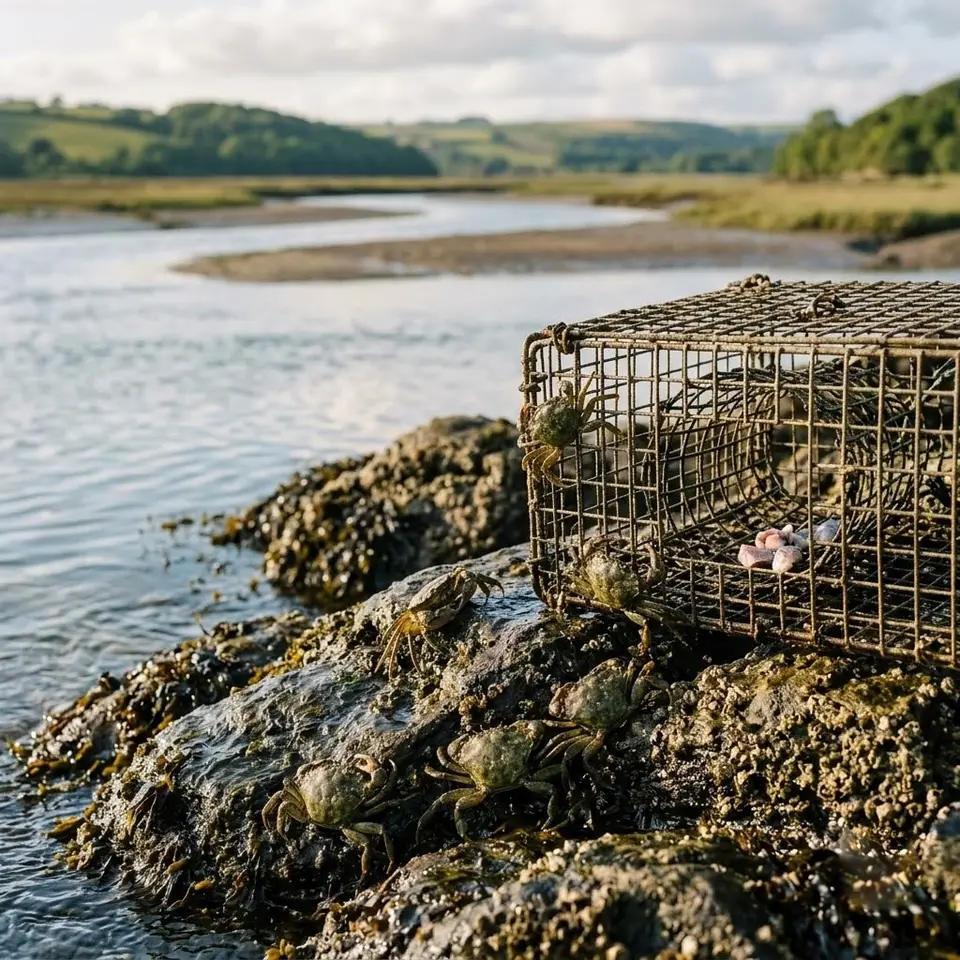
Green crabs are invasive - never release or transport them live to new waters, and check whether your state asks you to kill rather than return them. Shellfish is a common serious allergen; cook thoroughly.
Green crab is the crab you catch as much to help the coast as to fill a pot. This small, hardy shore crab is an aggressive invader on both US coastlines, chewing through clam and mussel beds, and many places encourage its removal - though the rules differ sharply from state to state. Where you are allowed to take it, it is one of the easiest shellfish to gather - and while it is too little to pick like a blue crab, it cooks down into some of the best seafood stock you will ever make.
Why go for them
The honest draw is twofold: an abundant supply of crabs for stock where your state lets you take them, and the satisfaction of removing an invasive that harms native clams and oysters. There is little pickable meat, but simmered whole they give a sweet, deep crab stock that rivals anything from the store.
Where and when to find them
Green crabs swarm rocky shores, jetties, tide pools, mud flats and estuaries, hiding under rocks and weed at low tide. They are most active in the warmer months and easiest to gather on a falling or low tide when you can turn rocks and reach their hiding spots.
How to catch them
You barely need gear. Turn rocks by hand (wear gloves - they pinch), or drop a small baited trap or a mesh bag of fish scraps in shallow water and lift it after an hour. A simple hand line with bait and a dip net works too. Because they are so abundant, a short session fills a bucket.
Handling, cleaning and cooking
Keep them cold and cook them the day you catch them. Rather than picking meat, blanch or steam them, then crush the whole crabs and simmer into stock, straining out the shell - the base for bisque, chowder, paella and pasta sauces. A few people fry soft-shell green crabs whole when they have just moulted.
Safety and the law
Rules for this invader differ sharply by state, so check before you gather. Oregon allows recreational harvest with a daily limit of 35. Washington is the opposite: there it is illegal to possess a live European green crab, and the wildlife agency asks the public to photograph and report a suspected one, not to kill it, because native crabs are often mistaken for it. Wherever you are, never move live crabs to other water. Gather shellfish only from waters certified safe for harvest, avoid closed or polluted areas, cook thoroughly, and remember shellfish is a serious allergen. See our shellfish safety guide before you start.
Kit for crabs, lobsters and crayfish
As an Amazon Associate we may earn from qualifying purchases - at no extra cost to you. We link gear types, not sponsors' picks: you choose the exact product. The partner-store link may earn us a commission too.