How to Dig Butter Clams
Butter clams are large, firm, rich Pacific clams that live a foot or more down, good steamed, fried or in chowder - real digging, and among the clams most prone to storing biotoxins, so closures matter.
Butter clams store biotoxins (PSP) longer than most clams and can be dangerous during closures - never dig them without checking the current biotoxin status with your local authority. Licence, size and limits apply; shellfish is a serious allergen.
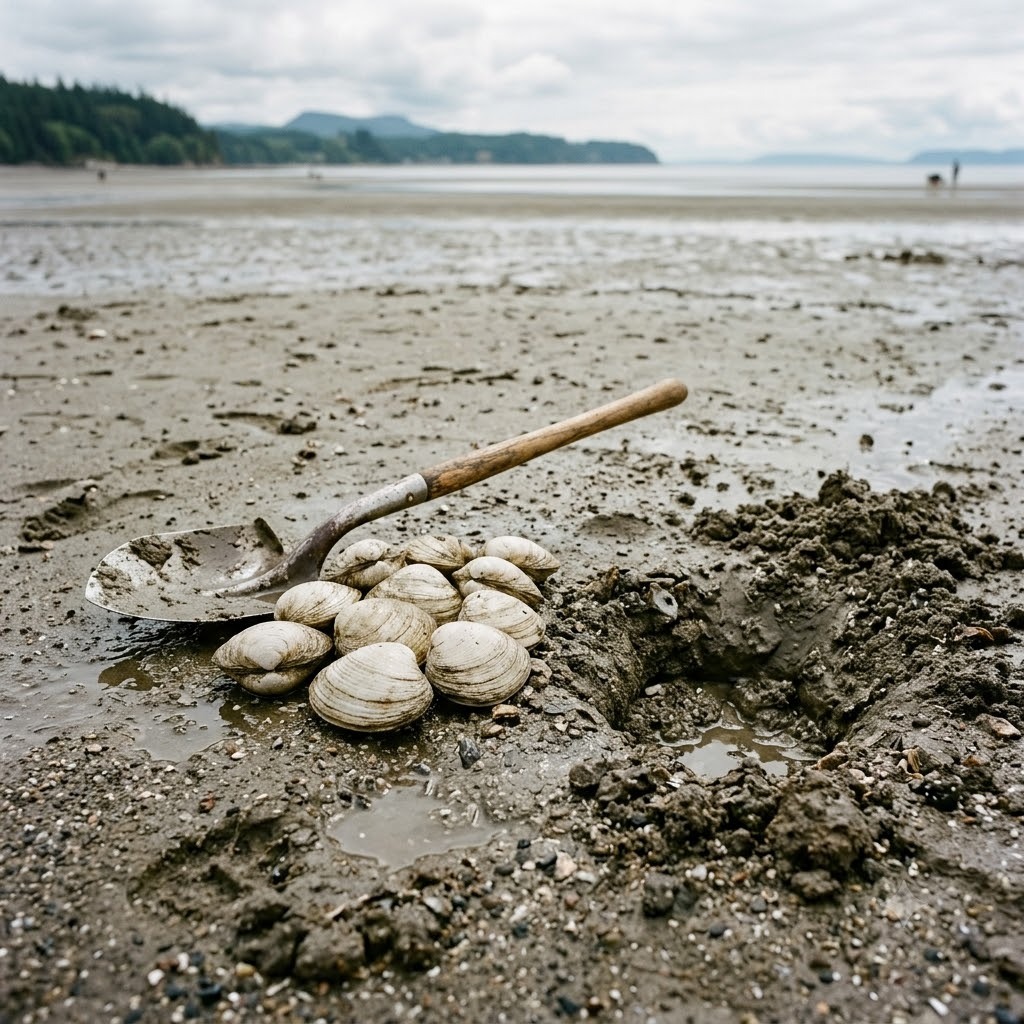
Butter clam is the clam you work for. Larger and firmer than a Manila, with rich, meaty flesh, it burrows a foot or more into sand and gravel flats, so filling a bucket means real shovel work against the clock as the hole fills with water. It rewards the effort with excellent chowder and fried-clam eating - but it is also one of the clams most likely to hold dangerous biotoxins, so respecting closures is not optional.
Why go for them
The reward is size and richness - firm, full-flavoured clams that make superb chowder, fritters and fried clams, with enough meat per clam to be worth the digging. There is also genuine satisfaction in the work; a good butter-clam dig is a proper low-tide effort that leaves you with a real haul.
Where and when to find them
Butter clams live in sand and gravel flats, often mixed with mud, and burrow deep - typically a foot or more down, deeper than most other clams. Work them on a good low tide, and look for larger siphon holes or a squirt of water when you step nearby. Note the tide, because you dig into wet ground.
How to catch them
This is shovel work. Once you find a bed, dig a hole beside the siphon marks and go deep and fast before water fills it, then reach in and lift the clams from the side of the hole. A clam shovel or gun and a strong back are the tools. Keep only legal-sized clams and backfill your holes to protect the beach.
Handling, cleaning and cooking
Rinse and purge the clams in cool seawater to clear grit. Butter clams are firm, so they are excellent chopped for chowder and fritters, steamed, or breaded and fried; the necks can be tough, so many cooks trim or grind them. Cook thoroughly and discard any clam that will not close or smells off.
Safety and the law
This matters more for butter clams than almost any other: they retain paralytic shellfish poison (PSP) far longer than other clams, so a beach can be unsafe for butter clams even when others are fine. Always check the current biotoxin status with your local shellfish authority before digging, get the required licence, and observe size and daily limits. Cook thoroughly; shellfish is a serious allergen. Read our shellfish safety guide.