Gizzard Shad
The gizzard shad is an abundant open-water baitfish that forms the forage base for many gamefish, and a common target for bowfishers and cut-bait anglers.
🗓️ Last reviewed: July 2026
Overview
The gizzard shad is an abundant open-water baitfish that forms the forage base for many gamefish, and a common target for bowfishers and cut-bait anglers. Though not a classic sport fish, it is central to freshwater ecosystems and a fixture of catfish and striper fishing.
Identification
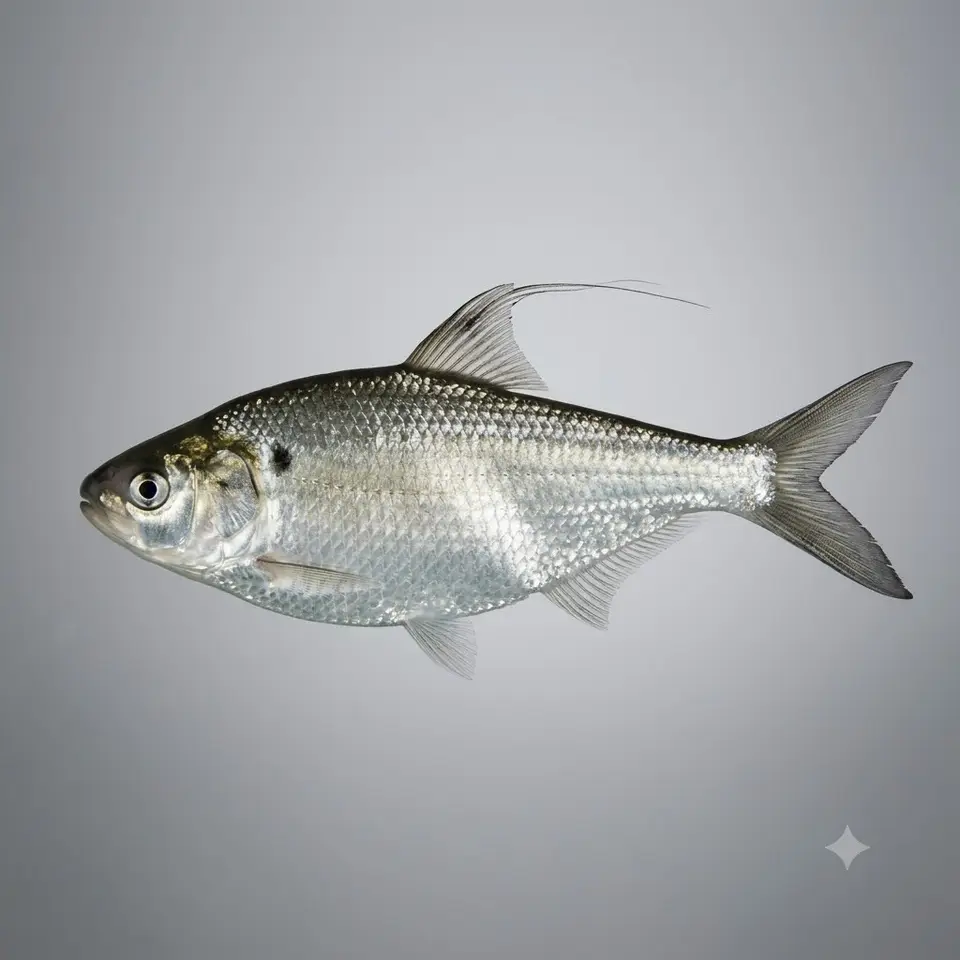
Gizzard shad are deep-bodied and silvery with a blunt snout, a long trailing filament on the last dorsal ray, and a dark shoulder spot in young fish. Their deep body and dorsal filament set them apart from herring.
Range & Habitat
They fill lakes, reservoirs and slow rivers across much of the US, roaming open water and shallows in large schools.
Behavior & Diet
Gizzard shad are filter feeders that strain plankton and detritus, schooling in open water and dying off in cold snaps that trigger gamefish feeding binges.
Best Seasons
They are present year-round; spring and summer bring big surface schools ideal for bowfishing and cast-netting bait.
How to Catch Them
Cast nets and bowfishing take them for bait and sport; they rarely take hooks, so netting is the main method, with cut shad a top catfish and striper bait.
Tackle & Rigs
A cast net for live bait, a bow rig for surfacing schools, or a fine sabiki-style rig; whole and cut shad are premium bait.
Landing, Handling & Release
Keep bait shad cool and lively; they are delicate and die quickly, so aerate a bait tank.
Table Quality
Gizzard shad are bony and oily and not eaten by people; they are prized instead as bait and forage.
Common Mistakes
Letting bait shad die from warm or crowded water and overlooking their role as the key to a catfish or striper bite.
Regulations & Conservation
Managed mostly as baitfish, with cast-net and bowfishing rules by state. Confirm current regulations before harvesting bait. We do not give legal advice.
FAQ
Can you eat gizzard shad? Not really - too bony and oily; they are bait and forage.
Why do anglers want them? As the top bait and forage for catfish and stripers.
🎣 Tackle for gizzard shad
As an Amazon Associate we may earn from qualifying purchases - at no extra cost to you. We link gear types, not sponsors' picks: you choose the exact product.