Raising Red Swamp Crayfish: The Classic Table Crawfish
A guide to farming red swamp crayfish - the hardy, prolific Louisiana crawfish grown in warm ponds and rice fields, tolerant of poor water and the backbone of the crawfish boil.
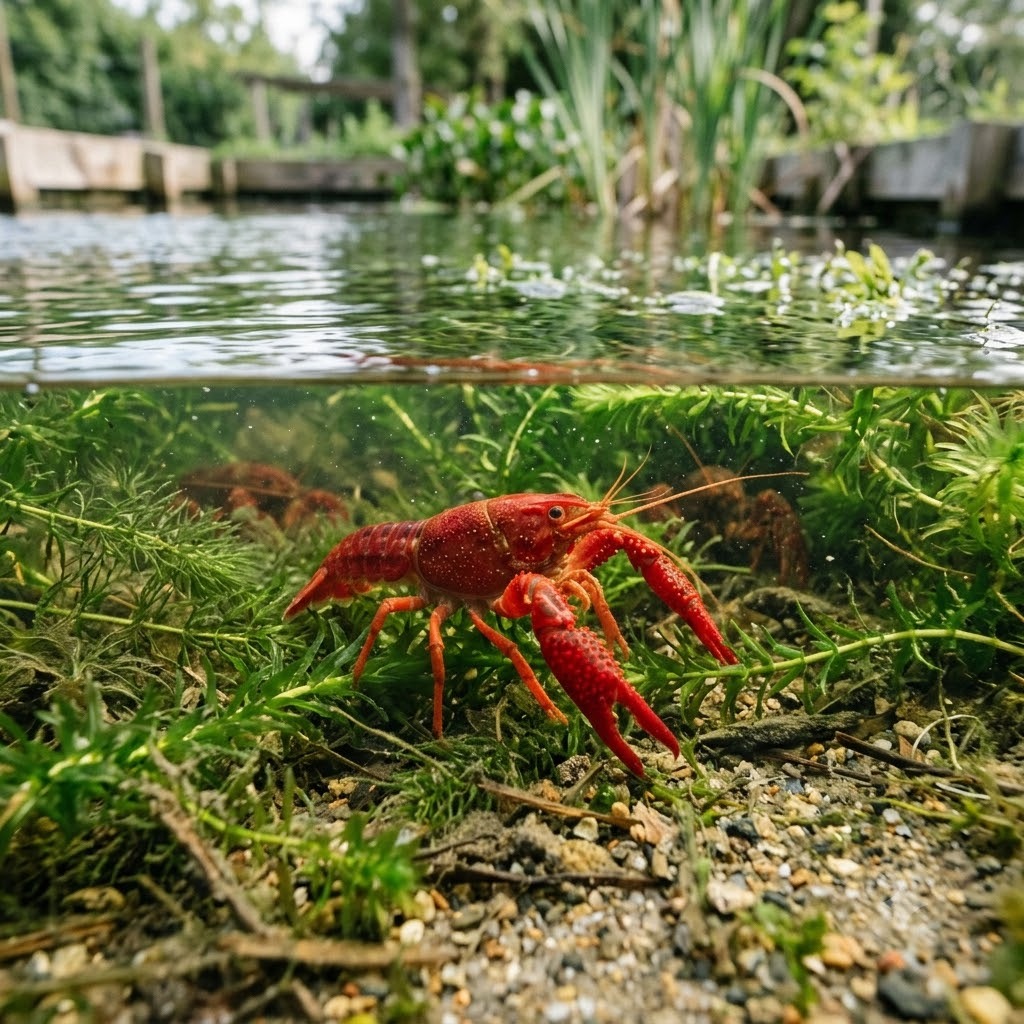
Red swamp crayfish are the crawfish of the Louisiana boil - hardy, prolific and fast-breeding, farmed for generations in warm ponds and flooded rice fields. They tolerate poor water and low oxygen that would kill fish, and they breed on their own, making them one of the easiest crustaceans to raise for the table. Their toughness, though, makes them a serious invasive risk to control carefully.
Is it right for you?
Red swamp crayfish suit a warm-climate grower who wants a hardy, self-breeding crustacean for the table. They are easy and prolific, but you must keep them contained and check local legality, as they are invasive.
System & Space
A shallow warm pond with vegetation, or a rice-field rotation, is the classic system; tanks work at small scale. Give them cover and a way to burrow, and secure the system against escape.
Water & Temperature
They thrive in warm water and tolerate low oxygen and poor quality remarkably well. They burrow, so pond banks and water-level management matter.
Stocking & Feeding
Stock breeders and let them reproduce; they eat detritus, vegetation, and supplemental feed. A vegetated pond largely feeds itself, needing little added input.
Health & Care
Extremely hardy with few disease issues in a clean warm system; the main management is containment (they escape and burrow) and not overcrowding.
Harvest & Enjoying Them
They breed prolifically and are trapped at market size for the classic boil - sweet, rich tail and claw meat that defines Cajun cooking.
Getting Started
Where legal, set up a contained warm vegetated pond, stock breeders, and manage water levels; confirm they are legal to keep before you start.
Common Mistakes
Releasing or letting them escape (a serious invasive risk), keeping them where illegal, and overcrowding are the main mistakes.
FAQ
Are they invasive? Yes - highly; never release them and check local legality.
Do they breed on their own? Yes - prolifically, which is why they are so productive.