Raising African Catfish: A Hardy, Explosive-Growth Food Fish
How to grow African (Clarias) catfish - an air-breathing, incredibly hardy fish that tolerates crowding and poor water, grows blazingly fast, and is a mainstay of high-density aquaculture.
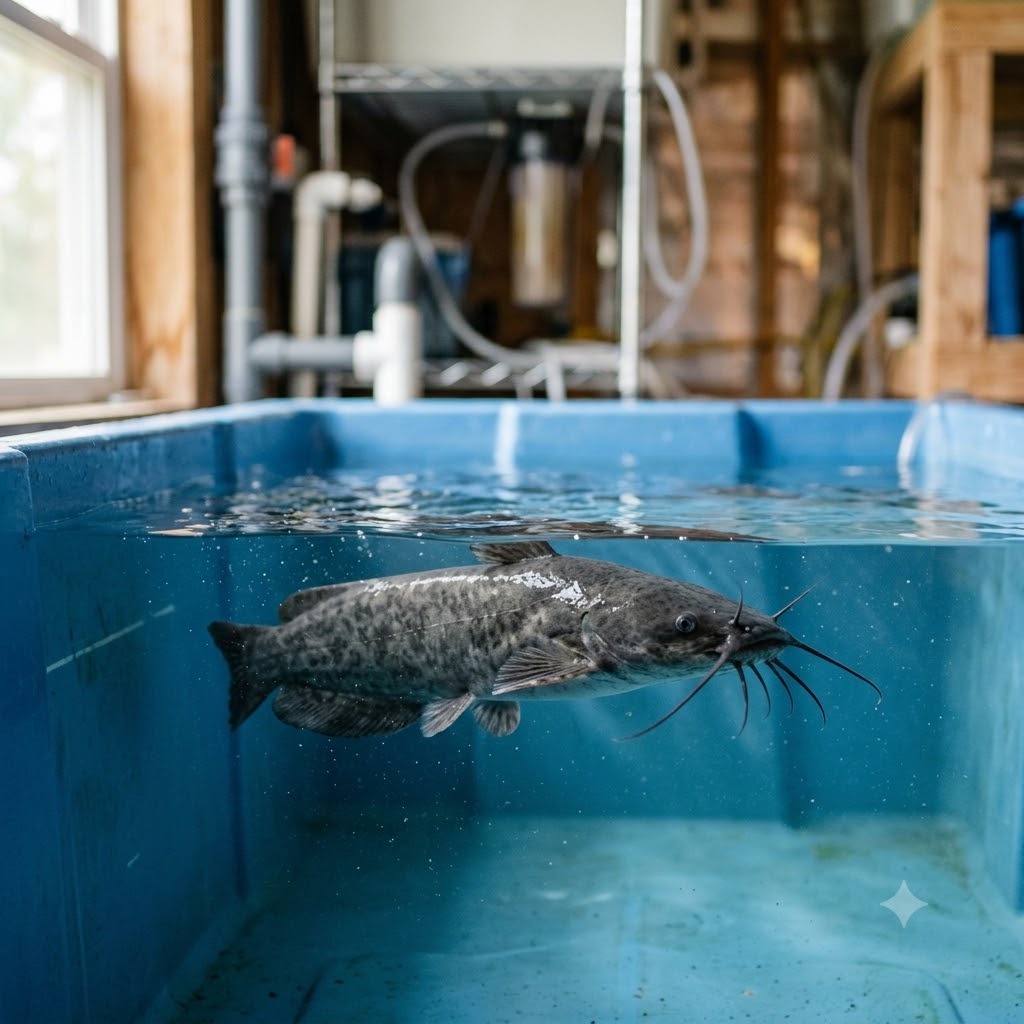
The African, or Clarias, catfish is arguably the toughest food fish in aquaculture. It can breathe air, survive in crowded, low-oxygen water that would kill other species, and grow at an explosive rate. That hardiness makes it a favorite for high-density backyard systems - just keep the tank covered, because they will try to climb out.
Is it right for you?
African catfish suit anyone who wants a fast, hardy, high-density food fish and does not mind a fish that can survive rough conditions. They are among the most beginner-proof species.
System & Space
They can be grown at high density in tanks, totes or lined tanks with modest filtration, thanks to their air-breathing ability. Always use a secure lid - they escape readily.
Water & Temperature
They prefer warm water, roughly 25-30C, but tolerate a wide range. Their air-breathing lets them survive low oxygen, though clean water still grows healthier fish.
Stocking & Feeding
Stock fingerlings densely and feed a high-protein pellet; they are voracious and grow fast. Grade to reduce cannibalism among mixed sizes.
Health & Care
Extremely disease-resistant in reasonable conditions. The main risks are escape and, with mixed sizes, cannibalism. Because this air-breathing fish is a serious invasive where it has been introduced, treat escape as an ecological and legal hazard, not just lost stock: never release it or let it get loose, and confirm it is legal to keep where you live before starting.
Harvest & Enjoying Them
They reach plate size very quickly, often in a few months, yielding firm, mild flesh popular fried, smoked and in stews.
Getting Started
Set up a covered tank or tote, stock fingerlings, feed heavily, and enjoy one of the fastest routes to homegrown fish.
Common Mistakes
The big ones are an uncovered tank (escapes) and mixing sizes (cannibalism); water quality is more forgiving than with most fish.
FAQ
Do they really breathe air? Yes - they have an accessory breathing organ and can survive out of water briefly.
Escape risk? High - always keep a secure lid. This species is invasive in many regions, so never release it and check that it is legal to keep where you live.